
Modern industrial processes are placing increasingly stringent demands on power quality. A stable and high-quality electricity supply is becoming an essential part of both industrial production and everyday life.
Businesses are also paying increasing attention to power quality, as poor power quality can lead to equipment malfunctions and damage, and in some cases can even interrupt production. Among the various power quality disturbances, voltage sags are one of the most significant, accounting for more than half of the losses associated with poor power quality. Although the losses caused by voltage sags are generally lower than those resulting from complete power interruptions, voltage sags occur much more frequently. This is particularly problematic for sensitive electronic equipment, which is more susceptible to faults and malfunctions caused by voltage sags.
Definition of Voltage Sags
Voltage sags are a common power quality disturbance. They occur when the RMS supply voltage suddenly drops to between 10% and 90% of its nominal value for a short period of time, before returning to normal within a few milliseconds to one minute. A typical voltage sag lasts between 10 ms and 600 ms.
In everyday life, voltage sags may simply appear as brief flickering of lights. However, in industrial environments, they can have much more serious consequences, including equipment shutdowns and, in severe cases, the loss of an entire production run. They can be particularly problematic for equipment that is highly sensitive to power quality, such as PLCs, variable frequency drives (VFDs), servo drives, motors, data centres and semiconductor manufacturing equipment.
It is important to note that voltage sags do not necessarily originate within a factory. They can also be caused by a short circuit or other fault elsewhere on the electricity grid. A fault can result in a large increase in current, causing the voltage to drop across the network impedance and leading to a temporary voltage sag across a wider supply area.
The following table compares different voltage conditions, using a 380 V supply system as an example.
| Item | Voltage | Duration | Typical manifestations |
| Normal Voltage | 100% | / | Equipment Operates Normally |
| Voltage Sag | 10%~90% | Milliseconds to Tens of Seconds | Equipment May Malfunction or Shut Down |
| Voltage Interruption | Near Zero | Milliseconds to Several Minutes | Equipment Loses Power |
| Undervoltage | <90% | Relatively Long | Equipment Remains in an Abnormal State |
| Overvoltage | >110% | Variable | Component Overheating, Breakdown, etc. |
How Do Voltage Sags Occur?
Voltage sags can be caused by a number of factors, both within an industrial facility and elsewhere on the electricity grid. The most common causes include:
1. Short-circuit faults on the power grid
A short circuit between phases or a single-phase-to-earth fault on a distribution network can cause a sudden increase in current over a short period of time. This results in a significant voltage drop across the impedance of the network, leading to a temporary voltage sag.
2. Starting of large motors
Industrial facilities often use a large number of high-power motors. When a large motor is started, particularly by direct-on-line starting, the starting current can reach 5–8 times the rated current or even higher. This sudden increase in current can cause the supply voltage to drop temporarily.
3. Transformer energisation
When a large transformer is energised, it can draw a high inrush current. This may cause a temporary drop in the local supply voltage, particularly in systems with limited short-circuit capacity.
4. Other grid disturbances
Voltage sags can also be caused by a range of other events on the electricity grid, including:
- Lightning strikes
- Trees coming into contact with overhead lines
- Cable faults
- Line trips
- Insulation failures
- Bird-related faults
- Accidental errors during electrical maintenance or construction
Even when these faults are cleared rapidly by the protection system, they can still cause a voltage sag lasting tens to hundreds of milliseconds, potentially affecting sensitive electrical and electronic equipment.
What Are the Hazards of Voltage Sags?
Modern industrial and commercial environments rely on a growing number of high-precision and highly sensitive electrical and electronic devices. As a result, voltage sags can have a significant impact on equipment and may lead to substantial financial losses. Common consequences include:
1. Equipment shutdowns
Voltage sags can affect equipment such as variable frequency drives (VFDs), programmable logic controllers (PLCs) and AC contactors on automated production lines. When the supply voltage drops below the operating threshold, a contactor may drop out, causing the motor to stop and potentially bringing the entire production line to a halt.
2. Production materials and products being scrapped
In industries such as semiconductor manufacturing, chemical processing and pharmaceuticals, production processes are often highly sensitive to interruptions. An unexpected shutdown can result in work-in-progress or raw materials being discarded, potentially causing losses worth millions.
3. Computers and servers restarting
A voltage sag can cause computers, servers and other electronic equipment to restart unexpectedly, potentially resulting in the loss of unsaved data and interruption of critical operations.
4. Reduced equipment service life
Frequent voltage fluctuations and voltage sags can place additional stress on electrical equipment, including motors and transformers. Over time, this can accelerate insulation ageing and reduce equipment service life.
According to industry statistics, up to 78% of incidents resulting in customer losses associated with power quality issues are attributed to voltage sags. The resulting costs of business interruption can be particularly significant and, in some cases, may exceed those associated with other power quality disturbances such as harmonics.
How Can Voltage Sags Be Mitigated?
To mitigate voltage sags, different mitigation equipment should be selected according to the specific application and operating conditions. The most appropriate solution should be chosen based on what the load is, how long it can tolerate a power interruption, how much power it requires, and where the fault originates. The aim is to address voltage sag problems efficiently, quickly and cost-effectively.
Solution 1: UPS
When a voltage sag occurs on the grid, the UPS (Uninterruptible Power Supply) detects the abnormal voltage condition and uses its inverter to maintain a stable output, allowing the load to continue operating normally.
UPS systems are typically suitable for equipment such as PLCs, servers and control systems.
Solution 2: Dynamic Voltage Restorer (DVR)
When voltage sags may cause a production line to shut down, a DVR (Dynamic Voltage Restorer) can be used to compensate for the voltage drop and maintain the voltage within an appropriate range.
A DVR can respond rapidly to voltage sags and restore the supply voltage. It can also provide three-phase voltage compensation.
DVR systems are mainly suitable for industrial production lines and loads located at the end of distribution networks.
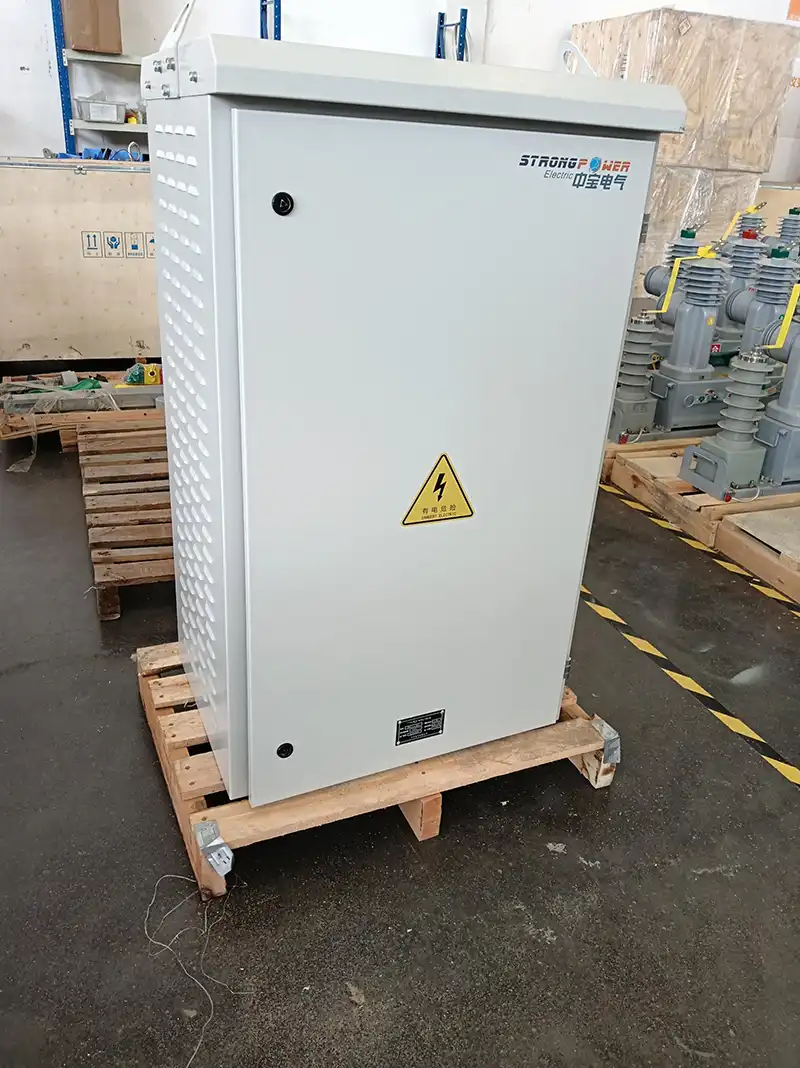
Solution 3: STS / Static Transfer Switch
An STS (Static Transfer Switch) is typically used in systems with two independent power sources. When one power source experiences an abnormal condition, the STS can rapidly transfer the load to the other power source, helping to prevent voltage sags from affecting critical equipment.
STS systems are mainly suitable for data centres, hospitals and high-reliability industrial loads.
Other Solutions
Other solutions are also available, such as upgrading the electrical distribution system or implementing voltage sag ride-through measures for specific equipment.
Regardless of which solution is selected, it is important to consider the sensitivity of the load, the value of the equipment, potential production losses and the available budget.
Carrying out power quality monitoring in advance can provide a clearer understanding of the voltage sag characteristics and help determine the most suitable mitigation equipment and solution.
If you are experiencing voltage sag problems, we can provide professional power quality services and tailored mitigation solutions to help ensure a reliable power supply and keep your operations running smoothly.