
A transformer is an electrical device that operates on the principle of electromagnetic induction. By adjusting the turns ratio of its windings, it can convert AC voltage and current from one level to another at the same frequency. This allows electrical energy to be transmitted, distributed, and used efficiently.
What is single and three phase transformer
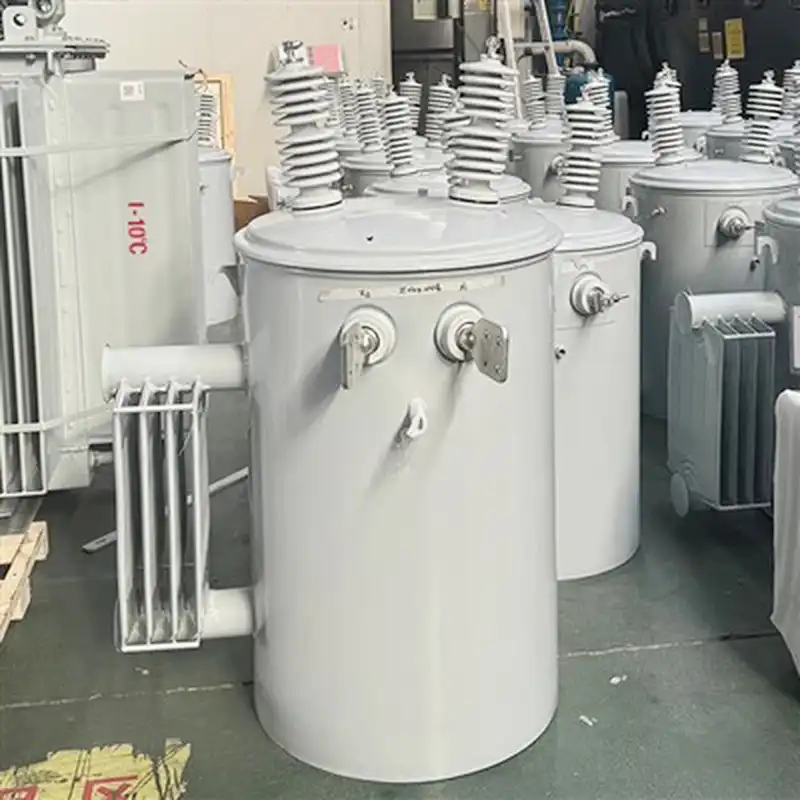
Single-phase transformer
A single-phase transformer is a static electrical device that operates on the principle of electromagnetic induction and is used in single-phase alternating current (AC) systems. Its primary role is to safely and efficiently convert voltage and current levels. It is chiefly composed of a laminated silicon-steel core and insulated wire coils wound around it. The coil connected to the power supply is termed the primary winding, while the one linked to the load is called the secondary winding. By altering the turns ratio between these two windings, the required step-up or step-down voltage conversion can be accomplished.
The working principle is essentially a process of “electric–magnetic–electric” energy transfer. When the primary winding is connected to an AC supply, the alternating current produces an alternating magnetic flux within the core. This varying magnetic flux flows through both the primary and secondary windings simultaneously, thereby inducing electromotive forces in each. Ideally, the voltage is proportional to the number of turns (U₁/U₂ ≈ N₁/N₂), whereas the current is inversely proportional. Thus, if the secondary winding has more turns than the primary, it acts as a step-up transformer; otherwise, it serves as a step-down transformer. The transformer itself does not create energy—instead, it enables the transfer and conversion of electrical energy through magnetic coupling.
Three-phase transformer
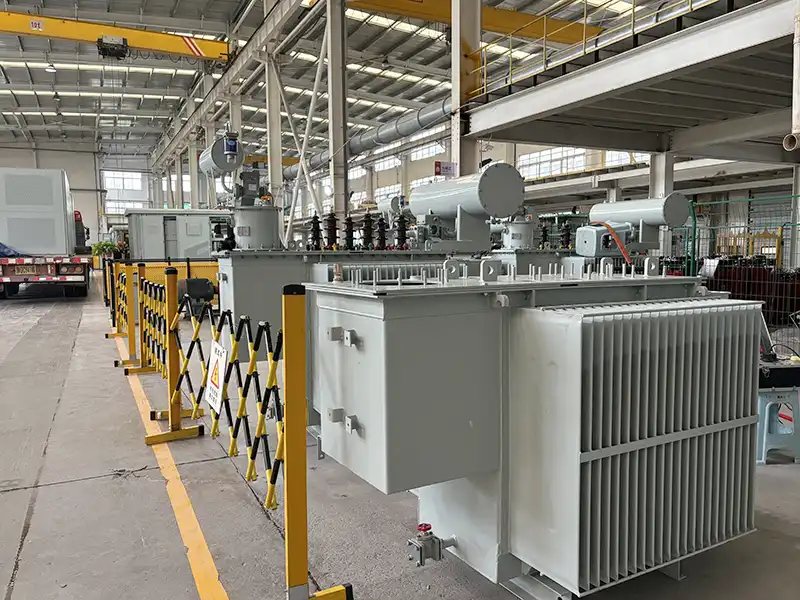
A three-phase transformer is a power device designed to transform three-phase AC voltage and current. Essentially, it integrates three single-phase transformers into a single unit. It employs a three-limb core with a shared magnetic circuit, where the windings for all three phases are arranged symmetrically: each limb carries both the high-voltage and low-voltage windings of the same phase. The windings can be flexibly connected in star or delta configurations to suit different voltage levels and load requirements. Compared with three separate single-phase transformers, this integrated design offers a more compact structure, saves material, and operates with higher efficiency, making it the standard equipment for power generation, transmission, and industrial distribution.
Its operation is based on electromagnetic induction, effectively coordinating three sets of single-phase transformations in both space and time. When symmetrical three-phase voltages are applied to the primary windings, the current in each phase produces an alternating magnetic flux in the core limbs, with a 120° phase difference between phases. The vector sum of the three-phase fluxes is approximately zero, allowing the magnetic circuit to form a closed loop and significantly reduce energy loss. The alternating flux links both the primary and secondary windings on each limb, inducing an electromotive force in each phase winding. The voltage transformation per phase follows the same turns-ratio principle as a single-phase transformer. Finally, the induced voltages on the secondary side are combined and delivered through star or delta connections, achieving three-phase voltage transformation and power transfer while maintaining system balance and stability.
What is difference between single phase and three phase transformer
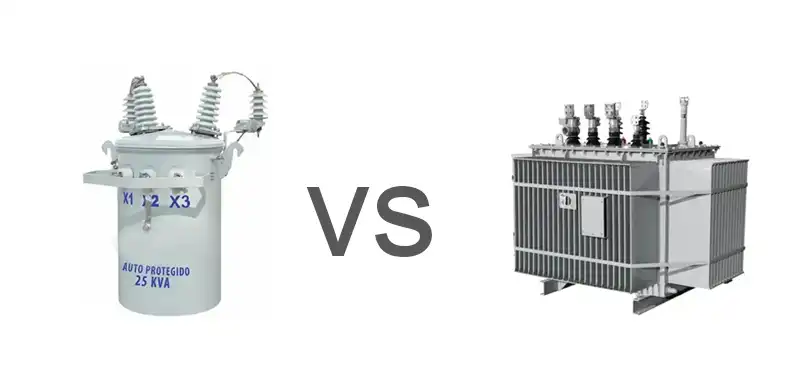
| Feature | Single-Phase Transformer | Three-Phase Transformer |
| Applicable System | Single-phase, two-wire (or three-wire, including neutral) AC system | Three-phase, three-wire or four-wire (including neutral) AC system |
| Core Structure | Single closed core (two or three limbs) | Three cores limbs at 120° to each other, forming a unified magnetic circuit |
| Windings | One primary and one secondary winding set | Three primary and three secondary winding sets (one pair per phase) |
| Space & Efficiency | For the same capacity, three single-phase units occupy more space and have slightly lower overall efficiency | For the same capacity, one three-phase unit is more compact, lighter, more efficient, and cost-effective |
| Application Scenario | Residential areas, small commercial, lighting, electronic devices | Power plants, substations, large-scale industrial plants—backbone of power transmission & distribution |
| Reliability | Failure of one unit affects only a single-phase supply | An internal fault may cause the entire transformer to shut down |
How to convert single phase to three phase transformer
A single-phase transformer fundamentally cannot be directly “converted” or “modified” into a three-phase transformer. This is due to essential differences in operating principles, internal construction, and magnetic circuit arrangement, similar to the inherent design and structural distinctions between a single-cylinder engine and a three-cylinder engine.
If it is necessary to supply power to three-phase equipment using a single-phase transformer or a single-phase power source, the following feasible technical solutions can be adopted. These methods do not involve internal modifications to a single transformer. Instead, they construct a suitable three-phase power supply system by combining multiple single-phase transformers or employing specific circuit configurations.
Option 1: Scott Connection Using Two Single-Phase Transformers
This configuration employs two identical single-phase transformers in a Scott-T connection to transform a single-phase supply into a balanced three-phase output.
Work Principle: One unit serves as the main transformer, the other as the teaser. Through specific tap configurations and interconnections—where the main transformer’s center tap is connected to one supply terminal and the teaser to an 86.6% tap—the system yields three output voltages with equal magnitude and a 120-degree phase displacement.
Option 2: Three-Phase Transformer Bank Using Three Single-Phase Transformers
This method utilizes three identical single-phase transformers. The primary windings are connected in either a wye (Y) or delta (Δ) configuration to a three-phase supply. The secondary windings are similarly interconnected (Y or Δ) to provide the required three-phase output.
Option 3: Single-Phase to Three-Phase Variable Frequency Drive (VFD) / Phase Converter
This is now the most prevalent and practical solution, particularly for driving three-phase motors.
This option employs standalone power electronic equipment. When supplied with single-phase 220V AC, its internal circuitry—comprising a rectifier, DC bus, inverter stage (typically using IGBTs or MOSFETs), and a control unit—generates a three-phase output with independently adjustable voltage and frequency.
How to convert three phase to single phase transformer
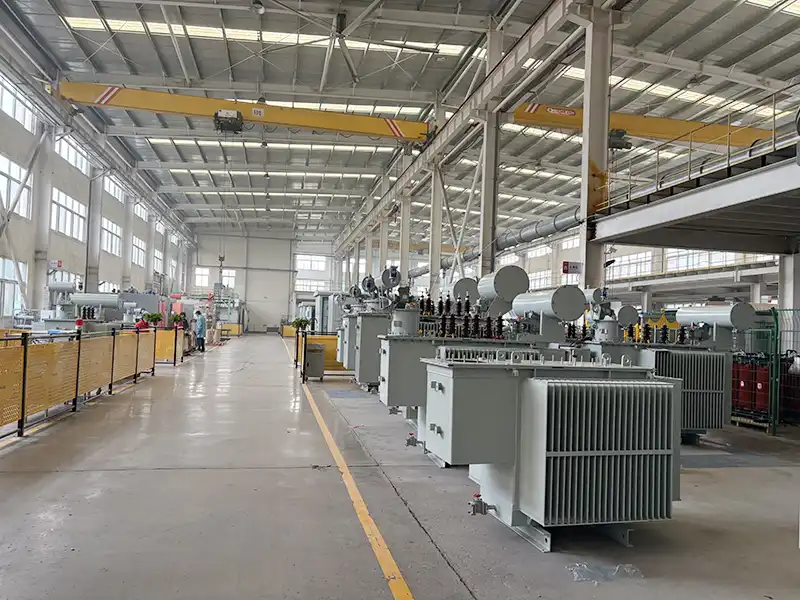
While “single-phase to three-phase conversion” is a different process, using a three-phase transformer as a single-phase transformer is not only feasible but also a standard industrial practice, provided that correct connection methods and safety precautions are strictly followed.
The core principle is that a three-phase transformer can essentially be viewed as three independent single-phase transformers in terms of its magnetic and electrical circuits. Therefore, one or two of its phases can safely be used to supply single-phase power.
Option 1: Use one phase from a three-phase transformer (standard and common practice)
This is the most straightforward and recommended method. Simply take the voltage from one phase of the transformer’s output.
Option 2: Reconfigure the three-phase transformer into a “single-phase transformer bank” (for very large single-phase loads)
If the single-phase load is exceptionally large—such as a big electric furnace or specialized test equipment—the three-phase windings can be rewired to supply the same single-phase load, making full use of the transformer’s capacity.
Recommendation:
In most situations, Option 1 is preferred. Always strive to maintain balanced loading across phases. If the single-phase load is too large, consider using a dedicated single-phase transformer instead. Option 2 should only be attempted with thorough electrical engineering review and calculations, and is not advised without relevant experience.
Important Note:
Always disconnect power and verify the absence of voltage before working. All work must be carried out by qualified personnel. Safety is the top priority.