Low Voltage Regulator Power Electronics
- Voltage compensation function
- Harmonic management function
- Reactive power compensation function

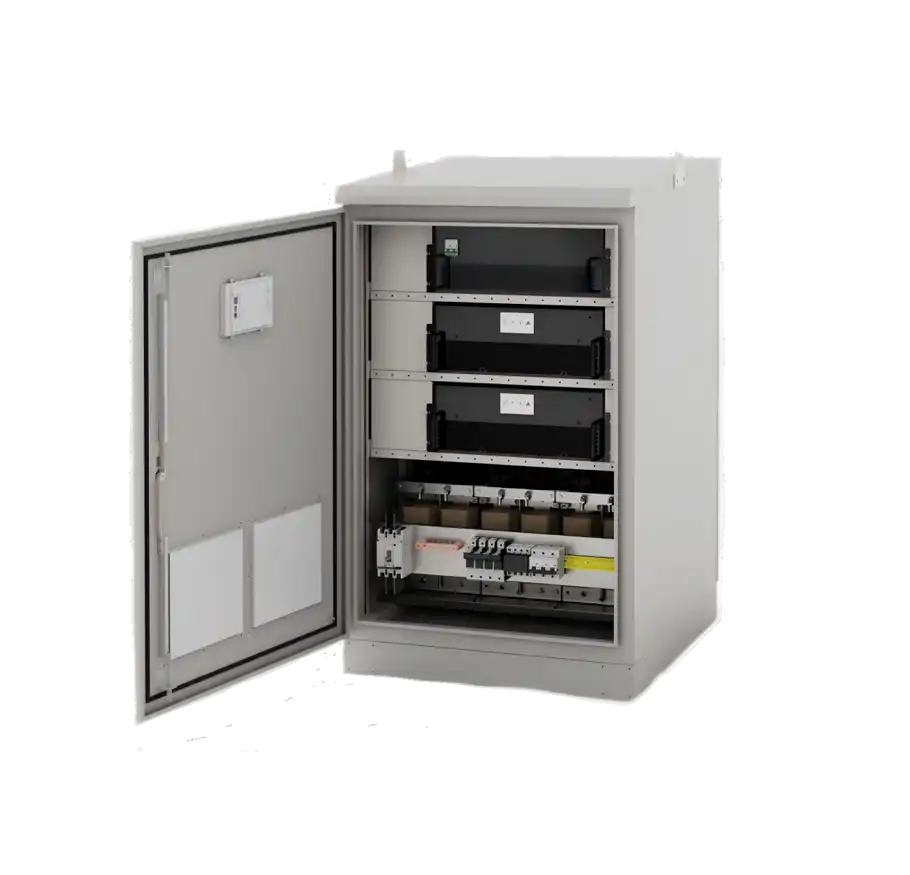
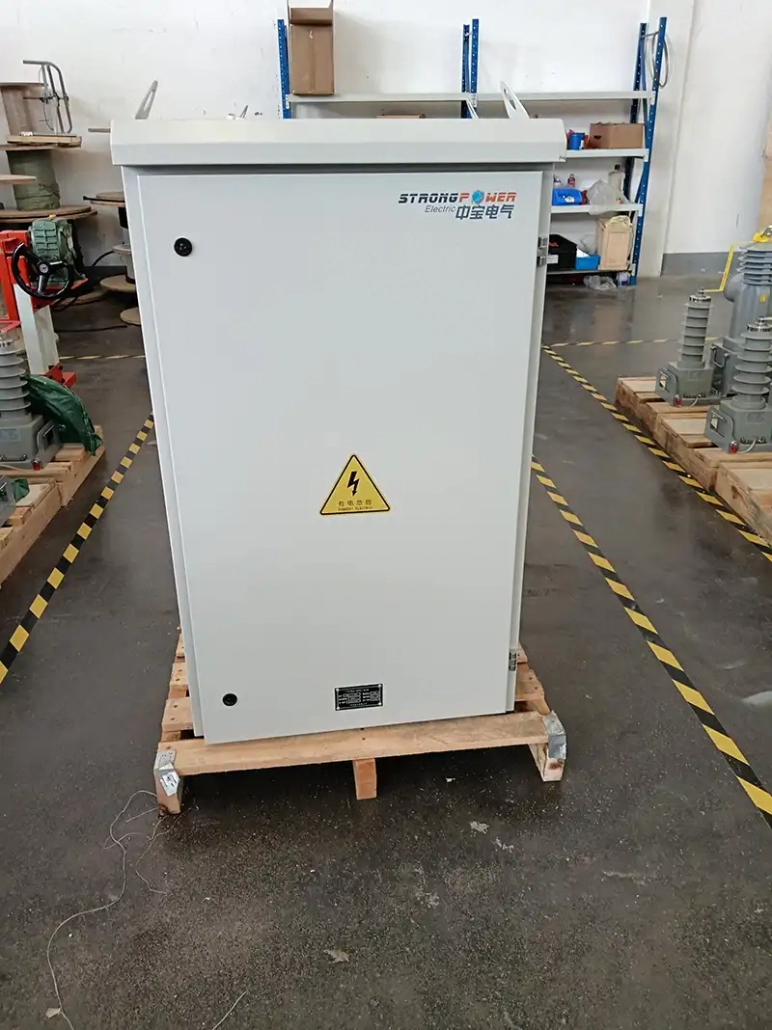
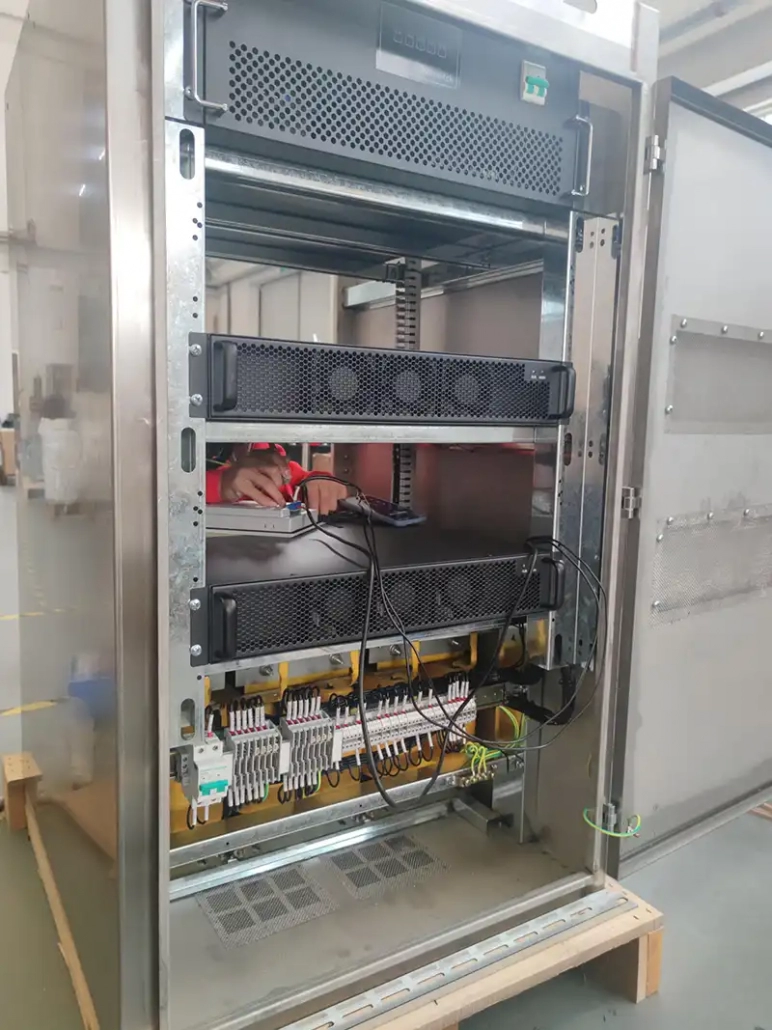
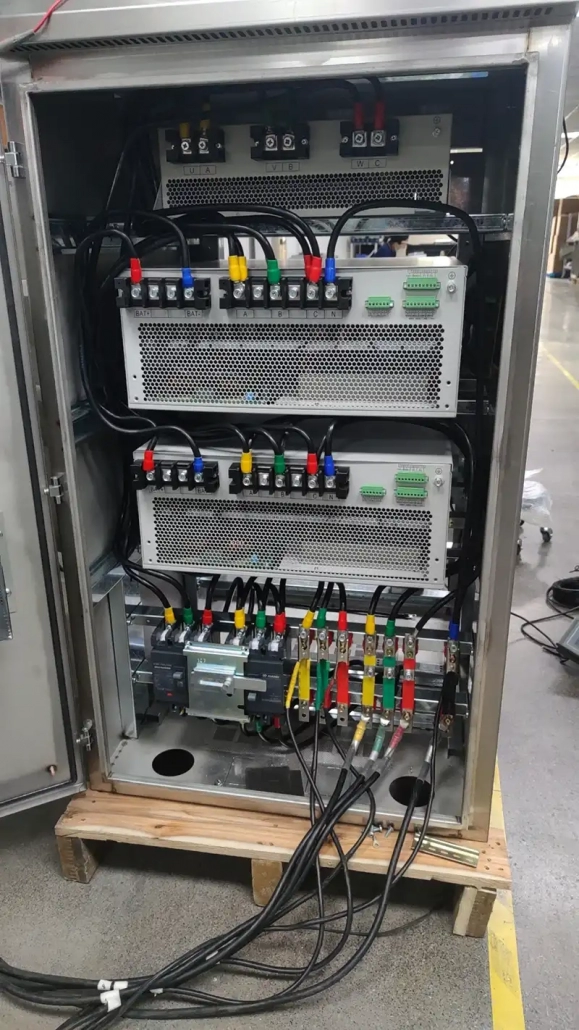
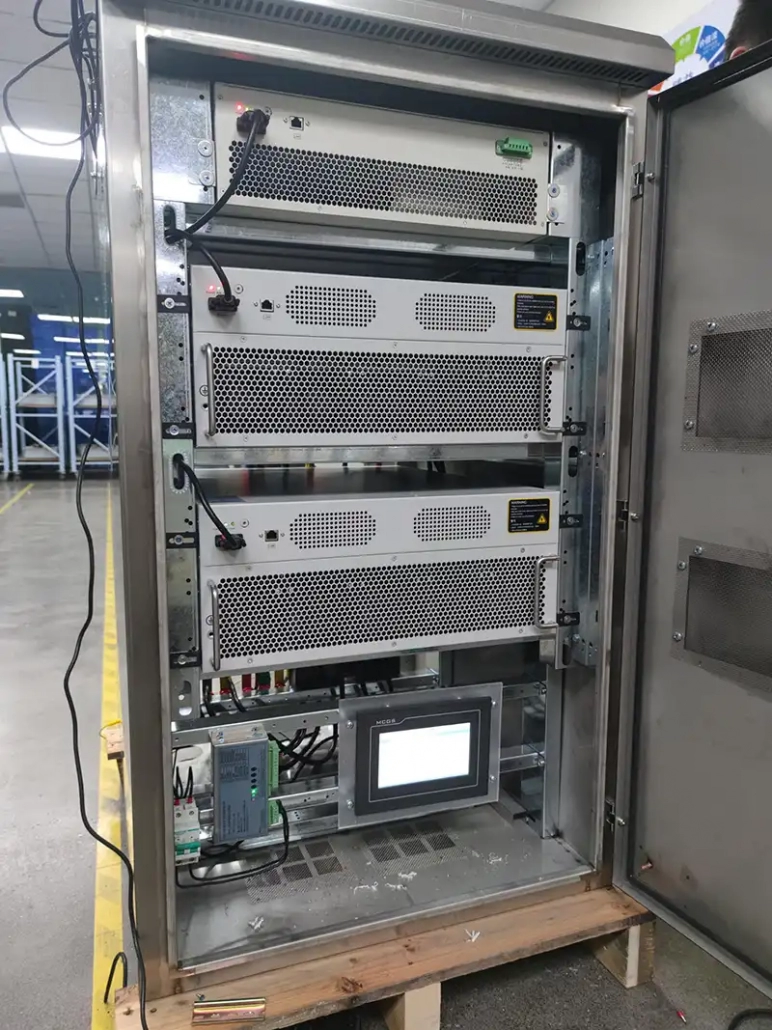
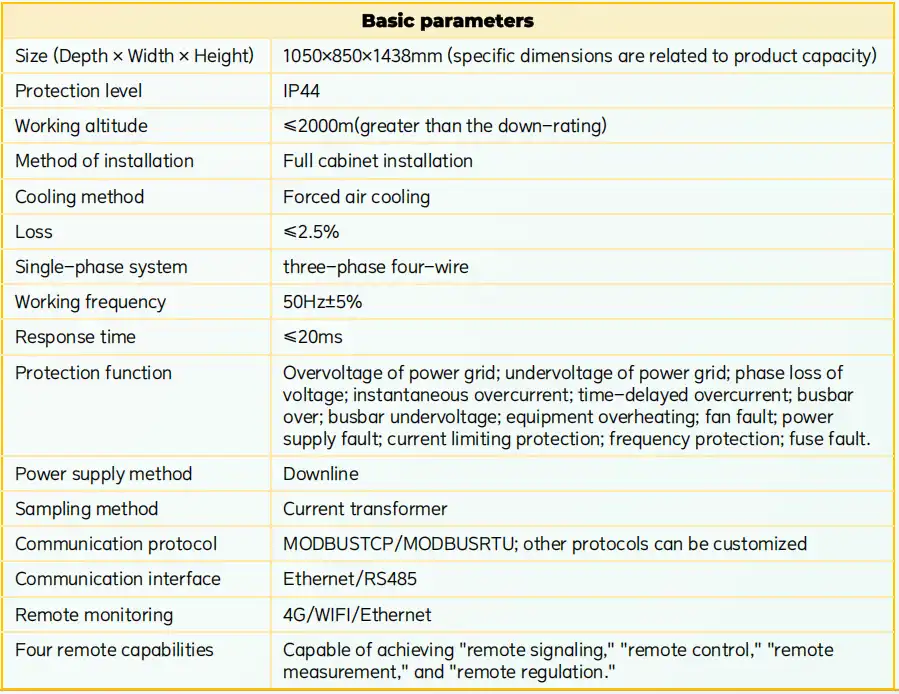
Our company’s UPQC power quality regulator addresses comprehensive issues like voltage instability and harmonics. The system comprises four components: a host unit (parallel-connected to the grid for reactive/harmonic compensation), a slave unit (converts DC to AC via inverter and transformer for voltage regulation), a series transformer, and a hybrid bypass switch (thyristor + contactor). The host’s DC bus powers the slave unit, enabling bidirectional compensation to stabilize grid voltage and correct load-side current issues simultaneously.
The unified power quality conditioner (UPQC) utilizes advanced control algorithms and power electronic technology to monitor the power grid in real-time, dynamically compensating for such as voltage fluctuations, sags, harmonics, and current peaks, thereby enhancing the stability and reliability of the power grid.
Its rapid response, low energy consumption, and adapt to different power systems and loads effectively improve power supply quality.
As power systems and quality standards continue to improve, the role of UPQC in ensuring reliable power supply will become increasingly important.
The Unified Power Quality Conditioner (UPQC) is an advanced system addressing both voltage and current quality issues in power grids. Integrating series and parallel active filters, it monitors grid voltage and load current in real time, dynamically generating compensation signals to eliminate voltage fluctuations, harmonics, reactive power, and phase imbalances, while enhancing power factor.
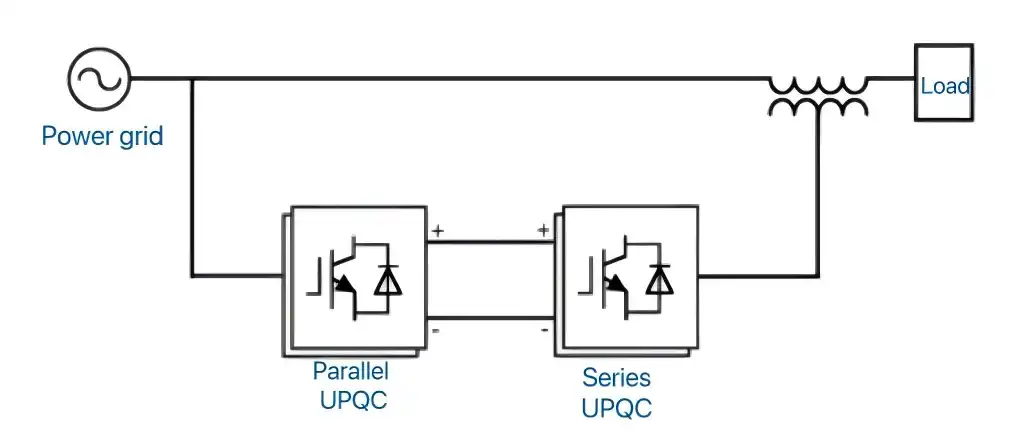
The UPQC comprises two components: series voltage-type (UPQC-S) and parallel current-type (UPQC-M), handling grid voltage and current issues separately. The UPQC-S dynamically compensates grid voltage to stabilize it, addressing fluctuations and sags. Meanwhile, the UPQC-M suppresses harmonics and current peaks via dynamic current compensation, improving grid current quality.
The device monitors the grid voltage in real time through a voltage sensor, obtaining real-time information about the voltage. Then, the voltage signal is sampled, and processed by the core controller inside the UPQC, generating corresponding compensation information.
The device’s compensation output is inversely transformed to the grid by series UPQC, and compensation signal is injected into the grid through operation, achieving compensation for the grid voltage. The series UPQC improves the stability of the voltage by adjusting the grid voltage to maintain consistency with rated voltage.
The UPQC uses current sensors to monitor grid current in real time. Its controller processes the signal to generate compensation data, which is injected into the grid. The parallel UPQC adjusts the current waveform to suppress harmonics, manage reactive power, and correct imbalances, enhancing grid current quality.
The parallel UPQC and the series UPQC are combined to work, which can achieve comprehensive control and compensation for voltage and current of the power grid. The voltage-type UPQC (UPQC-S) is mainly responsible for dealing with voltage problems, and the current-type UPQC (UPQC-M) is mainly responsible for dealing with current problems. The two work together to achieve comprehensive compensation and management of power quality.
 https://strongpowerelectric.com/wp-content/uploads/2026/06/Active-Harmonic-Filter-AHF-and-Static-Var-Generator-SVG.webp
600
800
strongpower
https://strongpowerelectric.com/wp-content/uploads/2022/07/main-logo.webp
strongpower2026-05-30 11:13:382026-06-13 09:57:57Technological Upgrade Power Quality Enters a New Era
https://strongpowerelectric.com/wp-content/uploads/2026/06/Active-Harmonic-Filter-AHF-and-Static-Var-Generator-SVG.webp
600
800
strongpower
https://strongpowerelectric.com/wp-content/uploads/2022/07/main-logo.webp
strongpower2026-05-30 11:13:382026-06-13 09:57:57Technological Upgrade Power Quality Enters a New Era https://strongpowerelectric.com/wp-content/uploads/2025/02/photovoltaic-power-stations-STATCOM.webp
472
800
strongpower
https://strongpowerelectric.com/wp-content/uploads/2022/07/main-logo.webp
strongpower2025-11-08 18:11:342025-12-06 08:20:47How to identify the optimal STATCOM manufacturers for your electrical network?
https://strongpowerelectric.com/wp-content/uploads/2025/02/photovoltaic-power-stations-STATCOM.webp
472
800
strongpower
https://strongpowerelectric.com/wp-content/uploads/2022/07/main-logo.webp
strongpower2025-11-08 18:11:342025-12-06 08:20:47How to identify the optimal STATCOM manufacturers for your electrical network? https://strongpowerelectric.com/wp-content/uploads/2025/11/Delivering-Enhanced-Power-Quality-Static-Var-Generators.webp
939
1200
strongpower
https://strongpowerelectric.com/wp-content/uploads/2022/07/main-logo.webp
strongpower2025-10-11 09:57:122025-11-04 05:43:11Delivering Enhanced Power Quality to Colombia with Our Static Var Generators
https://strongpowerelectric.com/wp-content/uploads/2025/11/Delivering-Enhanced-Power-Quality-Static-Var-Generators.webp
939
1200
strongpower
https://strongpowerelectric.com/wp-content/uploads/2022/07/main-logo.webp
strongpower2025-10-11 09:57:122025-11-04 05:43:11Delivering Enhanced Power Quality to Colombia with Our Static Var GeneratorsIf you are attracted to our products, please send us a message and we will contact you as soon as we receive it. Email: [email protected] Whatsapp:+8613653737638

Strong Power Electric is a leading company in smart grid distribution automation and power quality.