
The core of determining transformer capacity lies in load demand analysis, which must account for both existing load requirements and future development margins.
As a core component of the power system, transformer capacity selection directly impacts power supply reliability, operational economy, and long-term project development potential. An undersized transformer can lead to overload operation, accelerating insulation aging and increasing failure risks. Conversely, an oversized transformer results in higher initial investment, elevated no-load losses, reduced power factor, and poor long-term operational efficiency. Therefore, determining transformer capacity scientifically and accurately is a critical step in electrical project design.
What factors should be considered when selecting transformer capacity?
Transformer capacity selection is a systematic process that requires the comprehensive evaluation of multiple factors. The primary task is accurately calculating the project’s electrical load. This involves compiling a detailed equipment list, analyzing the installed capacity of all electrical loads, and using the demand factor method to determine the design load. For large industrial projects, load curve analysis is essential to identify peak and typical loads. Consideration must also be given to the proportion of critical loads, impact loads (such as large motor starting currents), and harmonic content (from devices like rectifiers and variable frequency drives), as these factors affect the transformer’s actual load capacity and thermal performance. Additionally, a reasonable development margin—typically 15%–25% of the calculated total load to accommodate growth over the next 5–10 years—should be incorporated.
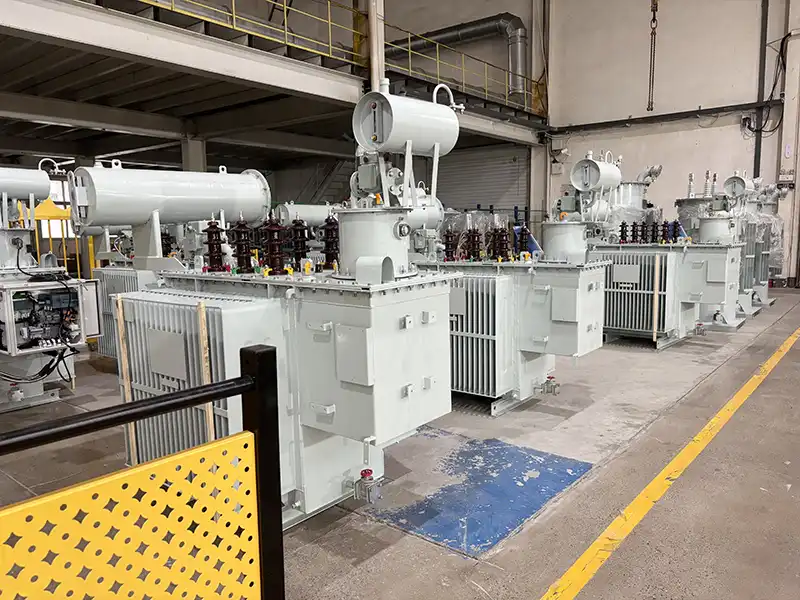
Load Analysis: Transformer Configuration Strategy
Based on load analysis, the power supply scheme and transformer configuration strategy must be defined. For critical or important secondary loads, two or more transformers are usually installed. In such cases, if one transformer fails, the remaining units should sustain all essential loads, which directly influences individual transformer capacity selection. Depending on load concentration and characteristics, a comparison between a single large-capacity transformer and multiple smaller units operating in parallel should be made: the former offers lower initial investment and a smaller footprint but reduced reliability; the latter provides operational flexibility, higher reliability, phased commissioning with project progress, and improved efficiency under light loads. The transformer load factor is a key indicator for economic operation, with a recommended long-term operating range of 60%–70% to balance losses and investment. Beyond the load itself, external conditions and overall energy efficiency are vital considerations. Grid conditions—including connection voltage level, power factor requirements, and harmonic restrictions—must be confirmed with the utility provider. The project’s natural environment, particularly ambient temperature and altitude, will influence cooling efficiency and actual output; accordingly, a larger capacity margin or specially designed transformers may be required.
Why choose Strong Power transformers?
Strong Power manufactures automation equipment for power distribution, delivering reliable, efficient, and cost-effective electrical solutions. The company offers a comprehensive range of transformer capacities, encompassing both three-phase and single-phase, etc.