
In the world of power distribution and transmission, the oil-immersed transformer remains the “backbone” of the global electrical grid. Despite the rise of dry-type alternatives, over 90% of medium-to-high voltage systems still rely on liquid-filled technology.
But why? In this article, we break down the advantages and disadvantages of oil-immersed transformers to help you make an informed decision for your next project.
The Advantages: Why They Dominate the Grid
Exceptional Heat Dissipation
Oil has significantly higher thermal conductivity than air. Through natural or forced circulation, oil carries heat away from internal components to external radiators far more efficiently than air. This enables the transformer to:
- Handle higher power capacities.
- Operate stably in high-temperature environments.
- Withstand temporary overloads without immediate damage.
Superior Insulation Properties
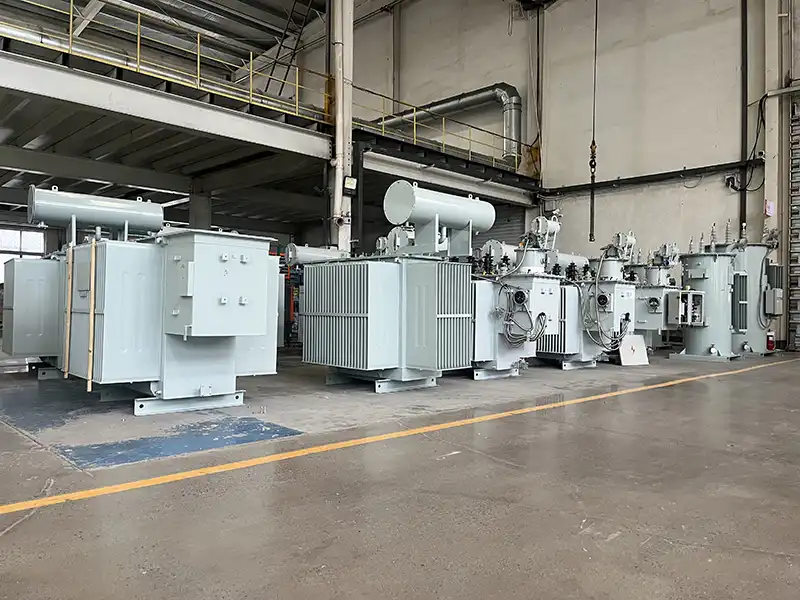
Transformer oil provides high dielectric strength and fully encapsulates the windings. This minimizes the risk of partial discharge and allows for a more compact design at higher voltage levels (e.g., 35 kV, 110 kV, and above).
Longer Lifespan and Higher ROI
With proper maintenance, an oil-immersed transformer can last 25 to 40 years. The oil acts as a barrier against moisture and oxygen—the primary causes of insulation aging in dry-type units. From a lifecycle perspective, these transformers often offer the lowest cost per kVA.
Technologically Mature & Easy to Maintain
As a century-old technology, these units are highly standardized. Their components are globally available, and maintenance procedures are well understood by technicians worldwide—a crucial factor for international EPC projects.
The Disadvantages: Potential Risks to Consider
Fire and Explosion Hazards
The main disadvantage is that mineral oil is flammable. If a severe internal fault occurs or the enclosure is damaged, there is a risk of combustion. This typically restricts the use of oil-filled transformers in indoor public spaces—such as shopping malls or hospitals—unless specialized fire containment systems are installed.
Environmental and Leakage Risks
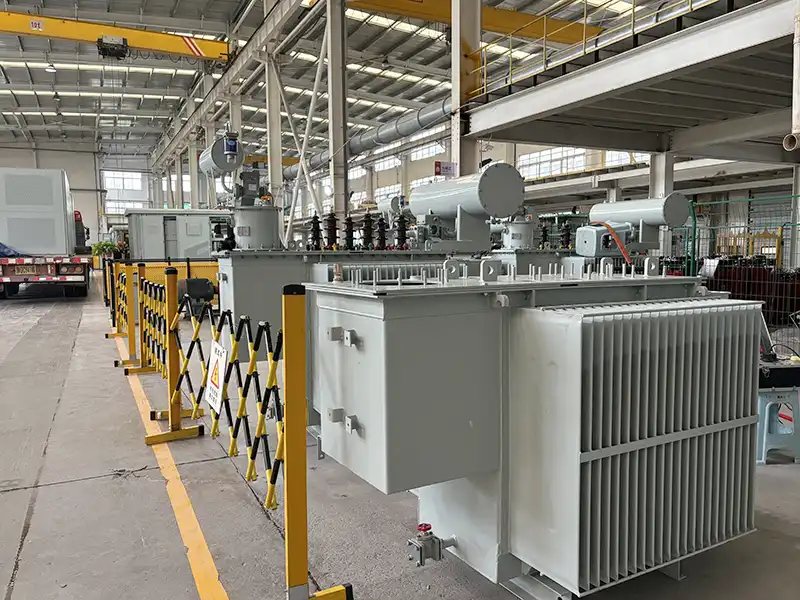
Oil leakage may happen due to aging seals or mechanical impact. If oil pits or containment trays are not used, such leaks can lead to soil or water contamination.
Regular Maintenance Requirements
Unlike “fit-and-forget” dry-type units, oil-filled transformers require periodic maintenance, including:
- Oil quality testing (dissolved gas analysis)
- Moisture checks and filtration
- Seal inspections
Comparison at a Glance: Oil-Immersed vs. Dry-Type
| Feature | Oil-Immersed Transformer | Dry-Type Transformer |
| Primary Cooling | Insulating Oil | Air / Cast Resin |
| Typical Environment | Outdoor / Substations | Indoor / High-fire-risk zones |
| Initial Cost | Lower | Higher |
| Capacity Range | Unlimited (Small to Extra Large) | Limited (Small to Medium) |
| Maintenance | Higher (Oil checks) | Lower |
Conclusion: Is an Oil-Immersed Transformer Right for You?
If your project demands high capacity, outdoor installation, long-term reliability, and a lower initial cost, the oil-immersed transformer is the clear winner. It remains the optimal choice for power plants, industrial zones, and utility substations.
However, for indoor installations in densely populated areas where fire safety is the top priority, a dry-type transformer may be the safer option.