What Is a Shunt Reactor?
Shunt reactors are devices used in power systems to compensate for capacitive reactive power, limit voltage rise at the end of a transmission line, and help stabilize grid voltage.
Electrical Shunt Reactor Definition
A shunt reactor is a high-capacity inductor coil connected in parallel to critical nodes within a power system, such as ultra-high voltage transmission lines, major substation busbars, and cable line terminals. Its primary function is to absorb excess capacitive reactive power, playing a key role in voltage regulation and stabilizing grid operation.
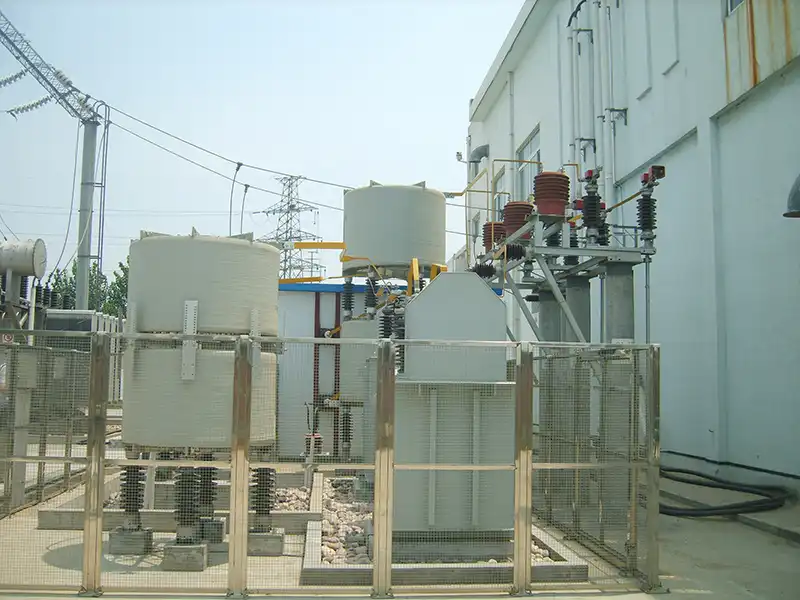
Shunt Reactor Working Principle
In power systems, particularly in high-voltage, long-distance transmission lines, distributed capacitance to ground exists. When the line is unloaded, lightly loaded, or operating under specific conditions, these capacitances generate significant reactive power. This causes the voltage along the line to rise and, in severe cases, can exceed acceptable limits, endangering equipment insulation and system stability.
The operating principle of a shunt reactor relies on the fact that inductive current lags voltage by 90°, while capacitive current leads voltage by 90°. When connected in parallel on the same busbar, the reactive power they produce—inductive(QL) and capacitive(QC)—acts in opposite directions and can thus cancel each other out.
Shunt Reactor Electrical Symbol
The relationship between the change in system node voltage ΔU and reactive power Q is given by: ΔU≈(QC−QL)*X
where X is the system reactance.
By installing parallel reactors (increasing QL), QC can be compensated, thus reducing ΔU and stabilizing the voltage within the allowable range.
Shunt Reactor Functions
Limiting Power Frequency Overvoltage:
Shunt reactors primarily compensate for the capacitive effect of unloaded lines. When a line is open-ended, its distributed capacitance leads to the Ferranti effect, resulting in a voltage rise. By supplying an inductive current to counteract the capacitive current, reactors suppress this voltage increase.
Additionally, they absorb transient overvoltage energy. During transient events—such as asymmetrical ground faults or sudden load shedding—reactors absorb excess reactive power from the system, thereby mitigating and reducing overvoltage.
Regulating Reactive Power and Stabilizing Voltage:
To meet system operating requirements—especially during low-load periods—the capacity of installed reactors can be adjusted in stages or continuously. This allows smooth regulation of grid voltage, prevents voltage excursions, and helps maintain reactive power balance.
Promoting the Extinction of Secondary Arc Current:
In the single-phase auto-reclosing process on ultra-high voltage transmission lines, after a faulty phase is isolated, the healthy phases continue to feed a “secondary arc current” into the fault point through inter-phase and ground capacitance, hindering arc extinction. When a shunt reactor is equipped with a suitably sized neutral reactor, it can compensate for this capacitive coupling, significantly accelerating the decay of the secondary arc current and improving the success rate of auto-reclosing.
Suppressing Switching Overvoltage:
During switching operations—such as energizing or de-energizing unloaded lines—shunt reactors act as damping elements, suppressing resonant conditions and reducing the amplitude of switching overvoltages.
Applications:
Ultra-high voltage (UHV) and extra-high voltage (EHV) AC transmission lines: These are typically installed at both ends of a line or at intermediate substations as a standard configuration for reactive power compensation.
Long-distance high-voltage cable lines: Due to their more significant capacitive charging current compared to overhead lines, shunt reactors are essential for compensating this effect.
Large substation busbars: Installed here to facilitate regional voltage regulation and maintain reactive power balance within the grid.
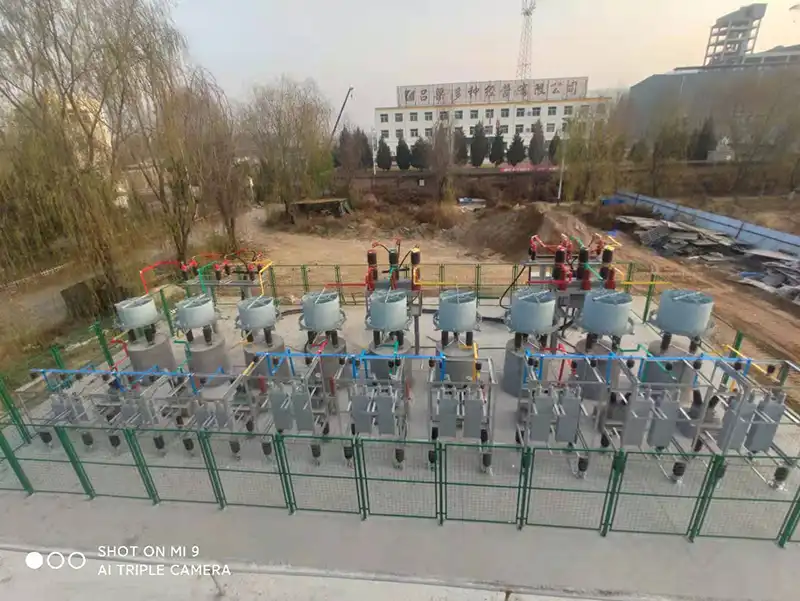
Power plant outlets: Particularly at hydropower plants transmitting power over long distances, shunt reactors are installed on the generator side to limit voltage rise during no-load or light-load operation.
How to find shunt reactor manufacturers in China?
Strong Power specializes in power quality products and distribution automation, delivering customized solutions tailored to our clients’ needs. Contact us today to receive your dedicated technical proposal.